

Using cannabis for your sleep routine is a reliable way of getting good, deep rest. For creatives, this is where midnight culture meets practical wellness science. No prescriptions, no groggy hangovers. Just knockout nights on recharge that actually clear your head.
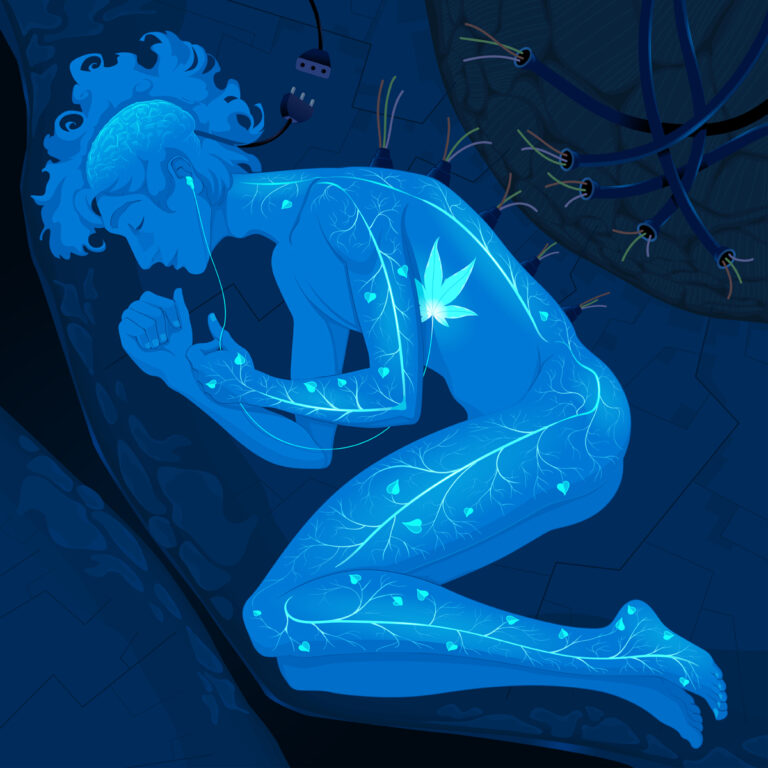
The evening turndown should feel like a fluid fade to black: What happens if it’s about that time but your brain’s still on go?
Simple, bring some bud into the mix and fall asleep in restful bliss. Everyone’s ritual looks a little different, and finding that sweet spot is usually a process of trial and error, which begs the question …
Does Cannabis Actually Help You Sleep?
Absolutely, cannabis can meaningfully improve how fast you fall asleep and how long you’re out for the count. In a future leaning toward biometric control and human microchip technology, sleep has always been the original biohacking method.
Working with the plant is an organic way to:
- Promote sleep
- Restore rhythm
- Lock in a better sleep cycle
The ultimate circadian setup for tomorrow’s success. Here’s what to know about the three cannabinoids doing the most work after dark.
THC vs. CBD: What Each One Does at Night
Understanding the effects of cannabis goes beyond a generic sedative feeling because different cannabinoids target a specific sleep phase to alter your biological recovery. When you use cannabis for sleep:
- THC boosts adenosine to fast-track sleep onset, though high doses can fragment your REM stage of sleep.
- CBD lowers cortisol to clear the mental runway for an anxious mind.
- Meanwhile, CBN, the lesser-talked-about cannabinoid, acts as a quieter sibling that extends deep sleep to expand your total sleep time.
Ultimately, how cannabis can affect your rest depends on the blend you choose:
<view in horizontal mode on mobile>
Cannabinoid
Primary Sleep Effect
Best For
Watch Out For
THC
Faster sleep onset to reduce anxiety.
Falling asleep quickly.
REM suppression at high doses.
CBD
Lowers cortisol to ease an anxious mind.
Stress-related insomnia.
Minimal direct sedation alone.
CBN
Extends deep sleep duration.
Staying asleep, heavy rest.
Limited formal research.
Full Spectrum
Encourages synergistic effect.
Well-rounded sleep support.
Varies per individual.
Because whole-plant, full-spectrum products naturally hit harder than standalone isolates, your choice simply comes down to matching the compound to your specific midnight hurdle.
Best Cannabis Strains for Sleep
Finding the best strains for sleep involves targeting deep physical relaxation over raw mental sedation. While indica options offer a more traditional night routine foundation, selecting the right cannabis flower depends entirely on the specific chemical compounds driving your recovery.
Using #cannabis to try and get a good nights sleep? We've found 8 strains that may help with insomnia.💤 https://t.co/WUC9fn5A1s
— Leafly (@Leafly) November 18, 2019
When comparing different strains of cannabis, terpene profiles offer a far more accurate roadmap than basic labels. High concentrations of myrcene and linalool interact directly with THC to drop your sleep onset latency, helping you drift off cleanly without the typical next-morning mental fog.
Several profiles stand out for delivering this chemical symbiosis:
- Granddaddy Purple relies on a high myrcene profile to deliver deep physical sedation, making this classic weed strain a go-to choice for improving your sleep.
- Northern Lights offers a highly consistent, smooth indica effect that knocks out insomnia, helping you cross that finish line much faster.
- Pink Kush provides a potent, full-body calm, exceptionally popular among South African medical patients seeking restful sleep.
- Bubba Kush leverages an earthy, deeply sedative terpene makeup to silence rapid thoughts right before the evening turndown.
- ACDC delivers a specialised high-CBD option that completely skips the typical psychoactive buzz, making it the ideal pick for anyone sensitive to heavy THC.
Choosing the right profile is only half the battle, especially since even the heaviest option can fall flat if your timing completely misses the mark. Learn how to sync these chemical compounds directly into your existing nighttime ritual to drive the best results.
How to Build a Cannabis Sleep Routine That Works
So, using cannabis as a sleep aid? It works! But how you use it matters as much as what you use. Less about whether you consume or smoke cannabis, a solid nighttime routine largely involves building a healthy habitual foundation that the plant supports rather than replaces.
Build your high-performance hibernation framework with practical habits tailored to how you live:
- Set a consistent wind-down window: Start dimming lights 60–90 minutes before bedtime. You want to use cannabis with your circadian rhythm, not against it, deepening the sleep effects over time.
- Choose your method based on timing: Learn and master different ways to use cannabis to master your timing. Smoking and vaping cannabis hits in minutes, while cannabis edibles take longer but sustain you. Fast-acting edibles now close that timing gap, giving you a quicker onset without needing to smoke before bed.
- Start low, go slow: If you are new to cannabis, start with a tiny 2.5–5mg THC dose. The goal here is pure relaxation, not getting completely baked for bed. Overshoot that dose, and you’re better off knowing how to fix a bad high than trying to sleep through it.
- Pair marijuana with movement: Do some light stretching before you consume cannabis in any form. This boosts your natural melatonin production, giving the bud a better foundation to build on.
- Set a consistent scene for sleep: Keep your bedroom cool, dark and quiet. When you incorporate cannabis into your routine, it enhances physical sensory awareness, making room comfort absolutely critical.
- Keep a sleep journal: Track your specific strains, doses and timing for 2–4 weeks. What works for others might not work for you, so treat your unique setup as a tailored experiment in what hits just right.
What the Research Actually Says About Cannabis & Sleep
Clinical data confirms that understanding cannabis and sleep requires tracking how specific cannabinoids interact with your biology to target underlying sleep issues. Leave out all the guesswork to look at the hard data, showing how the plant can build a foundation for healthy sleep:
- Real-world data aligns with user experience: A University of Colorado study published in Addictive Behaviors (Winiger et al., 2020) tracked 152 moderate consumers. The positive self-reported sleep data revealed that user expectations aligned with reality: the plant directly improved sleep quality, with older adults reporting the most pronounced benefits.
- Targeted relief for medical cannabis patients: Those using premium medical cannabis flower for pain or PTSD get clean help with sleep by calming a hyperactive nervous system.
- Molecular regulation of evening stress: According to Psychology Today’s clinical sleep reporting, dozens of active cannabis compounds fundamentally change how you wind down. This internal baseline is exactly why your specific product selection dictates how cannabis can affect your nightly rest and deliver real benefits for sleep.
Is It Safe to Use Cannabis Every Night for Sleep?
Using cannabis as a nightly sleep aid is something millions of people do, and for many, it works well long-term. That said, nightly THC use does come with some considerations worth knowing upfront.
- Tolerance builds: Regular THC users often find they need progressively higher doses to achieve the same sleep effect over time. Taking regular breaks, even a few nights a month, can help reset your baseline sensitivity and keep your routine effective.
- REM sleep suppression alters recovery: According to the Sleep Foundation, the picture becomes nuanced with nightly, long-term cannabis use. THC reduces time spent in REM, the phase most associated with emotional processing and memory consolidation.
- CBD is lower-risk for daily use: This cannabinoid is non-intoxicating, does not suppress REM and does not appear to produce the same tolerance effects as THC. Many sleep-focused users keep THC for nights when they really need it and use CBD or CBN-forward products more regularly.
My take? Treat the plant like a tool, not a crutch. For frequent cannabis consumers, managing your routine locks in sustainable sleep benefits. It completely bypasses the toxic hangovers of alcohol and the heavy morning fog of a prescription sleep med.
Explore how the community navigates plant wellness on its own terms. For real stories with no filter, visit The High Crowd’s Lifestyle Hub and dedicated THC420 page.
More FAQs About Cannabis for Sleep
Get straight answers on sleep and cannabis use, from brain chemistry to local laws.
Will cannabis affect my dreams?
Yes, THC suppresses REM sleep, meaning nightly cannabis users usually report fewer, less vivid dreams. While cannabis may help you drift off quickly, tracking the long-term effects on sleep matters because suppressing this deep recovery stage changes how you rest over time.
When you fall asleep with cannabis in your system, your brain actively cuts down on the dream phase. For chronic sufferers, that trade-off is often worth it to secure basic rest, but the nightly pattern ultimately shapes your overall recovery.
REM rebound is real. If you take a break, you might experience mild cannabis withdrawal symptoms like intensely vivid or chaotic dreaming for a week or two. This is completely safe; it is just your brain recalibrating and catching up on missed dream cycles.
Tip: If you want to doze off without changing how you dream, non-intoxicating options like CBD and CBN will not affect sleep architecture or suppress your REM stages.
Can cannabis cure insomnia?
Cannabis cannot cure insomnia, but it can meaningfully reduce sleep disturbance and improve overall rest for people whose sleep problems are tied to:
- Anxiety
- Stress
- Chronic pain
The plant works as an intentional, natural tool rather than a permanent fix. To sleep best, it should complement solid hygiene habits rather than serve as a standalone solution. If you are managing diagnosed sleep issues, using cannabis to help you drift off can provide a valuable, natural sleep alternative to pharmaceuticals.
The bottom line: Cannabis helps manage the symptoms that keep you awake, but it will not erase the underlying root causes of the sleep disorder. For long-term relief, use it deliberately as one piece of your broader health toolkit.
Is cannabis legal to use for sleep in South Africa?
Yes, for private use. The Cannabis for Private Purposes Act, signed by President Cyril Ramaphosa, explicitly permits adults to possess and use cannabis products in private spaces. This means that if you need cannabis to sleep, personal, private-home use is fully decriminalised under local law.
That same law is what creates opportunities for cannabis wellness retreats to build entire itineraries around legal, guided consumption. However, the commercial market remains strictly locked down. You can’t walk into an unlicensed commercial cannabis dispensary and legally buy THC-heavy sleep aids or recreational products.
Selling the plant on the open market remains a criminal offence. Instead, legal access to formal cannabis for medical use, such as high-grade cannabis oil, is regulated by SAHPRA under a Section 21 application. That medical framework is ideal for anyone looking to address chronic sleep issues in an official, clinical way.
Follow The High Crowd for elevated industry insights on cannabis for your sleep routine. Join the conversation on Instagram, Facebook and X (Twitter).