

Atlanta’s Magic City has spent forty years doing something no radio station or record label could ever replicate. It turned a DJ booth into the most trusted A&R department in the South. Long before streaming numbers meant anything, a room full of dancers decided which records lived and which ones died on the spot. That’s how Magic City changed hip-hop.
Shop now! http://t.co/laO08TMlfs pic.twitter.com/rUwxmUmOFq
— Magic City (@MagicCity) February 10, 2015
Since 1985, the club has quietly written the soundtrack to Southern rap, incubating anthems from Tag Team’s breakout hit to Big Boi’s biggest records. The High Crowd pulls back the curtain on the Forsyth Street club that earned the nickname “Black Studio 54.”
Get the full story on how Magic City changed hip-hop. See how a space built on raw, elevated entertainment rewrote the rules of the music industry.
What Made Magic City a Hip-Hop Hitmaker?
So, the comparison holds up. Where New York’s Studio 54 defined nightlife for one era and one city, Magic City has done it for four decades and an entire regional sound. Southern hip-hop legends, including Big Boi, Jermaine Dupri and 2 Chainz, have all pointed to the club as a formative stop in their careers, not a footnote.
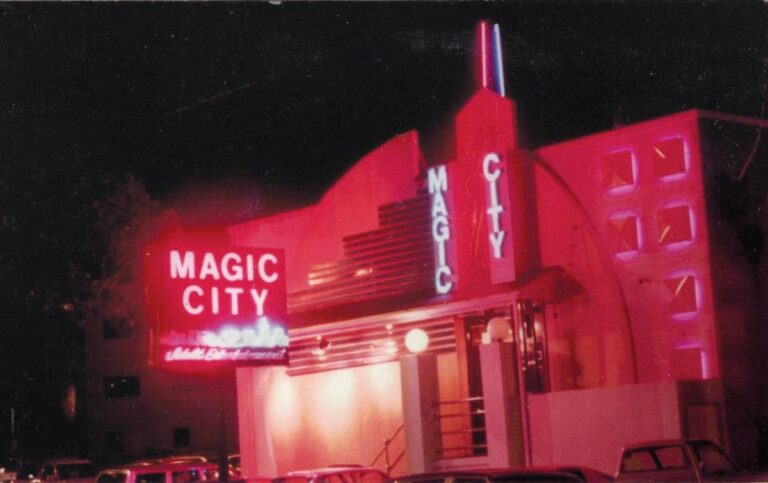
The strip club established its massive influence by bringing the entire culture under one roof. It allowed creators to see exactly how their tracks moved in a live room in real time. Over the decades, the club has built a reputation as the space where global icons and the crowd move as equals. Some things never change.
This enduring star power is exactly why the venue’s massive cultural legacy has finally been cemented on screen. To document this legendary run, executive producers Jermaine Dupri and Drake’s DreamCrew Entertainment teamed up with STARZ for the five-part docuseries Magic City: An American Fantasy.
Where Can You Watch the Magic City Docuseries?
If you’re streaming from South Africa, the easiest way to watch the series is via Prime Video. Already have an active Prime subscription? Add STARZ as an extra channel add-on directly inside the app to stream all five episodes. It’s a solid addition to any weed watchlist built on real music history rather than scripted drama.
The series breaks down how a single strip club rewrote the hip-hop industry playbook through:
- The origin story: Founder Michael “Mr Magic” Barney’s own account of building the empire from the ground up.
- The real blueprint: The dancer’s perspective, tracing icons from the 1980s through today’s current roster.
- Unseen history: Rare archival footage spanning the club’s four decades on Forsyth Street.
- Certified receipts: Direct interviews with Big Boi, 2 Chainz, Killer Mike, Quavo and Drake.
How Did Magic City Launch Real Songs?
Magic City functioned as a live testing lab, and one song proves it better than any other. Cecil “DC the Brain Supreme” Glenn was working as a DJ at the club in 1992 when he first played an unreleased track on cassette.
Before the song even finished, people were crowding the booth, asking what it was. That track became “Whoomp! (There It Is),” one of the best-selling rap singles of all time.
As one half of Tag Team, Glenn had just proven the club’s true power. That pattern repeated for decades. Big Boi has described using the club to test OutKast’s “B.O.B. (Bombs Over Baghdad)” before it became one of the group’s signature records.
The logic was simple. If a room full of dancers and patrons reacted to a record in real time, radio would follow. Magic City wasn’t just where hits got played first. It’s where they were built. And at the centre of that building process were the dancers who shaped it.
What Role Did Magic City's Dancers Play in Breaking Hits?
Magic City’s dancers acted as the club’s real gatekeepers, deciding which songs got airtime long before any label executive weighed in. According to Jermaine Dupri, the system was direct.
A song that caught on with the club’s most influential dancer that week would keep getting replayed, sometimes without the artist even paying for it. That reaction became the unofficial signal that a record was ready for radio. This wasn’t a side effect of the club’s culture. It was the business model.
Executive producer Bayan Joonam has called Magic City an unofficial A&R hub, where dancers and audiences picked the hits years before streaming platforms existed. For Atlanta’s biggest artists, from Future to Migos, that stage was often the first real test their music ever faced.
This dancer-led feedback loop built the original test-and-release blueprint that modern rollouts still rely on, showing how club culture consistently shaped mainstream hip-hop. That same testing instinct lives on in reference tracks today, though AI has made spotting a real leak from a fake one far trickier.
Visit our Lifestyle Hub to discover how far this influence goes. Read how strip culture shaped modern fashion, a crossover that continues to redefine the latest trends.
More Magic City FAQs
Magic City’s influence raises questions that extend beyond a single club or documentary. Here’s what readers are asking.
What are the top stripper anthems broken live at Magic City?
Juicy J’s “Bandz a Make Her Dance” leads the sequence of generation-defining tracks that established the club’s status as a premier music industry hitmaker.
Explore the top 5 stripper anthems broken live at Magic City below:
These hits proved that the stage functions as the ultimate testing ground for tracks aiming for mainstream radio dominance.
What hip-hop songs reference Magic City?
Atlanta’s iconic venue has woven its way into the very fabric of rap music, earning countless lyrical shout-outs across every generation of Southern hip-hop. The scale of the club’s name-dropping ranges from explicit mentions in early-nineties hits to modern trap anthems, solidifying its position as a permanent cultural landmark.
The catalogue of tracks explicitly paying homage to the Forsyth Street club includes legendary records and modern hits like:
- Magic – Future
- Strip Club – The 2 Live Crew
- Magic City – 2XL feat. UNK
- Magic City – Fivio Foreign ft. Quavo
- Magic City Money – Jermaine Dupri
- Magic City Monday – Jeezy
This massive footprint in rap lyrics mirrors the venue’s real-world influence. It proves the space controls the streets long before hits reach mainstream airwaves.
Why is Monday night ("Magic City Mondays") considered the most legendary night at the club?
Monday nights became a cultural phenomenon, transforming the venue into the absolute centre of the music industry. This weekly fixture established a high-stakes networking hub fueled by heavy spending, drawing elite crowds under one roof, including:
- Local artists
- Record executives
- Professional athletes
As music icon Jermaine Dupri notes, it is the one night where an average patron stands side-by-side with millionaires, major record executives and street legends.
"The best way for me to describe Magic City is “hip-hop adult Cirque du Soleil.”
Jermaine Dupri Tweet
Labels and artists hand unreleased tracks straight to the DJ booth, treating the night as the ultimate testing ground. They’re banking on real-time reactions from the women, turning that floor into a high-stakes boardroom.
Catch her if you can tonight! 😍 pic.twitter.com/qvS6qQ14WN
— Magic City (@MagicCity) February 2, 2020
This specific, high-energy atmosphere became so influential that it directly inspired Jeezy’s trap anthem “Magic City Monday.” The track captures the exact mix of music scouting, celebrity presence and financial flexing that turned Mondays into hip-hop’s most powerful launchpad.
Does Michael Barney still own Magic City?
Yes, Michael “Magic” Barney is still the official owner of Magic City. He faced a major setback in 1994 when a 10-year prison sentence forced him to sell the club to his brother-in-law, Derrick Cooper. However, Barney ultimately reclaimed control of the venue he founded in 1985.
By navigating that massive legal fallout and bringing the business back under his direct leadership, Barney cemented the multi-million-dollar empire’s legacy. Stepping back into the driver’s seat not only preserved the club’s independent status but also permanently anchored the fusion of hip-hop and club culture.
Have an untold story about Magic City’s strip club culture? Get in touch, and we’ll share it. Follow us on X for more unfiltered nightlife insights.
The High Crowd: Real Stories, No Filter
At The High Crowd, we don’t split music, nightlife and cannabis culture into separate conversations because they have never existed in isolation. Magic City’s story sits exactly where the crowd gathers, right where heavy bass and raw style dictate what moves the streets next.
We don’t sanitise the culture. We celebrate it, leading with:
- Lived experience
- Unfiltered perspectives
- Real human storytelling
The community is the platform, meaning this isn’t just content to scroll past; it’s a crowd you belong to. Serving up the best in puff-puff press, and then some, we go where the culture takes us.
Explore our THC420 page for cannabis content in high demand. Join the crowd on Instagram and via Facebook to spark conversations that matter.